From Tight Chest to Calm Body: A Nervous System Guide
Estimated Reading Time: 6 minutes
A tight chest.
Shallow breathing.
That wired-but-tired feeling, even when nothing is technically wrong.
You’re functioning. You’re capable. You’re getting things done.
And yet your body feels braced.
If that sounds familiar, this isn’t about weakness or overreacting. It’s about a nervous system that has been carrying quiet, constant pressure for longer than it should have to.
This guide will help you understand:
what a tight chest really means
how your nervous system moves between stress and safety
why calm can feel far away
and how regulation becomes the foundation for growth
Because real expansion doesn’t start in the mind.
It starts in the body.
Inside This Article
1. What a tight chest is really telling you
2. The nervous system explained simply
3. Sympathetic vs parasympathetic states in daily life
4. Why modern life keeps us stuck in fight or flight
5. Why calming the body comes before personal growth
6. Small ways to support your nervous system gently
1. What a Tight Chest Is Really Telling You
A tight chest is usually a sign your nervous system is in a protective state. It’s your body preparing for perceived stress, even if your mind doesn’t see a clear threat.
A tight chest is rarely “just anxiety.”
It’s often your body saying:
“I’m working hard to keep you safe.”
When the nervous system senses pressure, uncertainty, emotional responsibility, or prolonged stress, it activates protection. Muscles contract. Breath shortens. Awareness narrows.
This can happen even when life looks fine.
Especially if you are:
emotionally aware
responsible for others
high-functioning and capable
used to pushing through discomfort
Your body doesn’t respond to how insightful you are.
It responds to how safe it feels.
2. The Nervous System Explained Simply
Your autonomic nervous system controls your stress and safety responses automatically. It shifts between activation and regulation, shaping how you think, feel, and grow.
Your nervous system runs beneath conscious thought. It regulates breathing, heart rate, digestion, emotional processing, and your sense of safety.
There are two core states to understand.
Sympathetic Nervous System
Often called fight, flight, freeze, or fawn.
This state prepares you for action. It’s powerful in short bursts. It’s exhausting when it becomes constant.
In this state, you may notice:
chest tightness or pressure
racing thoughts
shallow breathing
irritability or numbness
difficulty resting even when tired
Parasympathetic Nervous System
Often described as rest, digest, heal, and grow.
This is where:
emotions process naturally
digestion improves
breath deepens
new neural patterns form
clarity returns
True healing and sustainable growth happen here.
3. Sympathetic vs Parasympathetic States in Daily Life
Many people live primarily in sympathetic activation without realizing it. Small daily stressors accumulate, keeping the body subtly braced.
It’s not just big trauma that activates stress.
It’s:
checking emails before your feet hit the floor
constant notifications
holding tension in your jaw or shoulders
feeling wired but exhausted
needing distraction to rest
These are signs your sympathetic system is leading.
When the parasympathetic system is supported, the body softens. The chest opens. Breath deepens. The mind quiets, not because you forced it, but because the body no longer feels under threat.
4. Why Modern Life Keeps Us Stuck in Fight or Flight
Modern life creates chronic low-grade stress. Even without major trauma, constant stimulation and responsibility can keep the nervous system in protection mode.
The body does not distinguish well between emotional stress and physical danger.
Chronic activation can come from:
digital overstimulation
productivity pressure
emotional caregiving
financial uncertainty
lack of true rest
constant decision-making
Over time, alertness becomes your baseline.
Calm starts to feel unfamiliar.
Effort feels normal.
Stillness feels uncomfortable.
This is not a personal failure. It’s a physiological pattern.
5. Why Calming the Body Comes Before Personal Growth
Growth integrates only when the nervous system feels safe. Without regulation, insight creates pressure instead of transformation.
Growth is often framed as mindset work.
But if your nervous system is overwhelmed, growth can feel like:
more pressure
confusion
emotional flooding
shutdown or avoidance
When the body feels safe, growth feels like:
curiosity
grounded clarity
steady expansion
sustainable motivation
Calming the body is not a detour from growth. It is the foundation.
6. Small Ways to Support Your Nervous System Gently
These are not quick fixes. They are invitations.
1. Notice Without Fixing
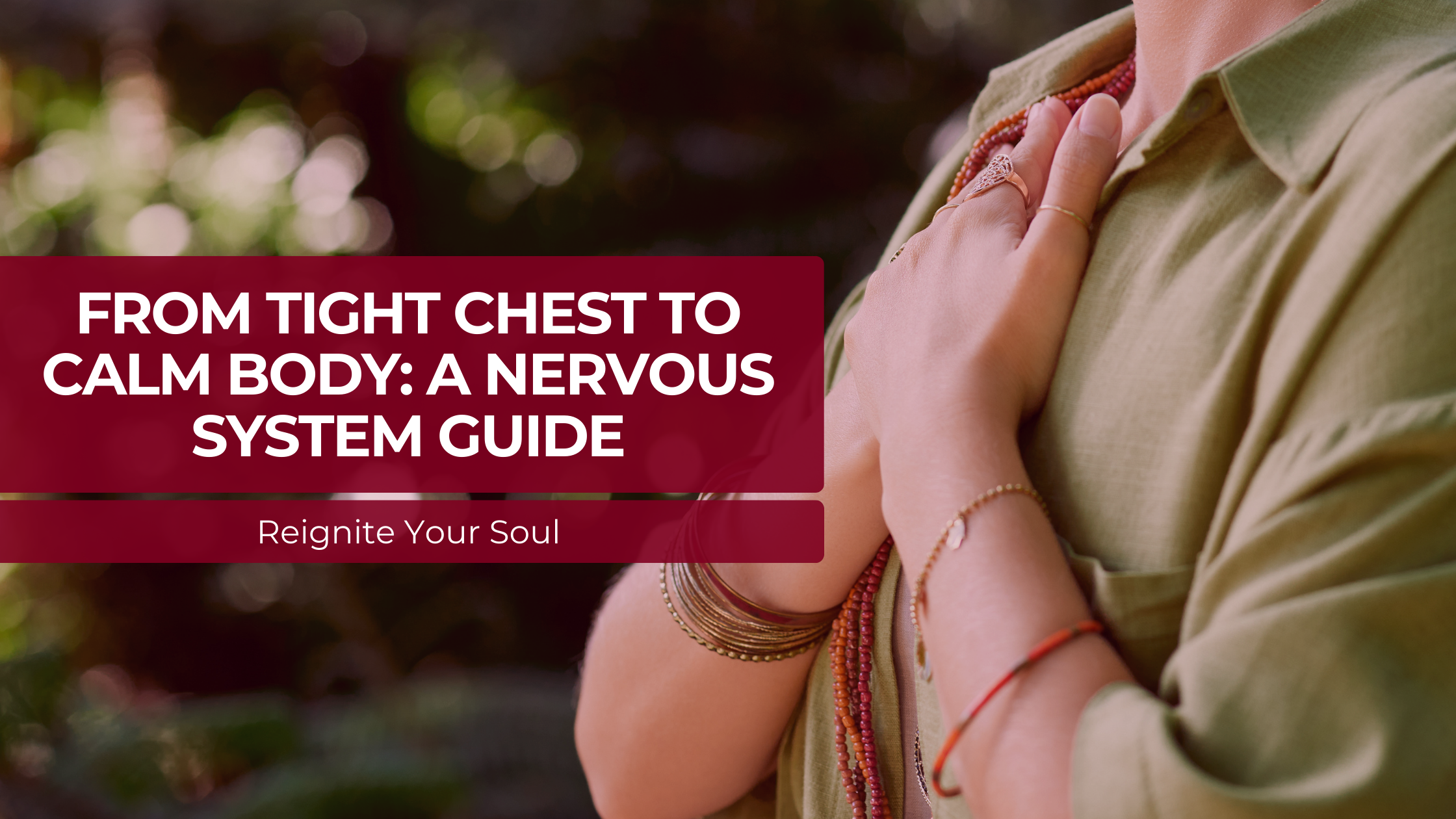
Place a hand on your chest or belly. Notice temperature, pressure, movement. Let awareness be enough.
2. Slow the Exhale
Longer exhales signal safety. Try breathing in for four, out for six. No force.
3. Remove One Layer of Demand
Ask: What can be simpler today? The nervous system responds to relief more than effort.
4. Choose Consistency Over Intensity
Regulation happens through repetition. Five minutes daily is more powerful than one dramatic reset.
7. When Deeper Support Can Change Everything
The nervous system regulates more easily in relationship. Consistent, attuned support reduces bracing and accelerates integration.
Many people try to regulate alone.
But the nervous system settles faster when it knows:
support is steady
someone understands the terrain
you don’t have to hold everything at once
When your system stops bracing, clarity returns naturally.
You don’t need more willpower.
You need safe conditions.
8. A Gentle Invitation
If you’re ready to move from tight chest to calm body, and you want support that feels:
steady instead of overwhelming
embodied instead of purely mental
relational instead of isolating
We invite you to book a Discovery Call.
This is a calm, grounded conversation to explore:
what your nervous system has been carrying
what kind of support would feel stabilizing
how to create safety before pushing for change
Your body doesn’t need more fixing.
It needs rhythm.
Consistency.
Care.
And from that place, everything else begins to shift